AI food image analysis: what a meal photo can and cannot measure
A photograph may show rice, chicken and vegetables on a plate. It does not necessarily reveal how much oil was used, the exact proportion of each ingredient or whether the recipe was prepared differently from the standard version.
That distinction may seem minor when someone simply wants to keep a food diary. It matters much more when the resulting data is used to monitor a patient’s intake, assess adherence to nutritional treatment or personalise a digital health service.
Research presented at NUTRITION 2026 has brought this issue back into focus. Investigators used standardised photographs of 102 meals prepared in a metabolic kitchen, where each ingredient had been weighed to the nearest 0.1 gram. They compared the meals’ known composition with estimates produced by MyFitnessPal, Lose It!, CalAI and Appediet.
All four apps underestimated energy by an average of 250 to 345 kilocalories per meal and fat by around 30 grams. Carbohydrate estimates were more consistent. In a subsequent analysis of more than 200 meals, still described as preliminary, the errors appeared to be greater for ketogenic meals, probably because of their higher fat content.
The findings deserve attention, but they do not show that every AI food image analysis system produces the same error. The results were presented at a conference and have not yet been published as a peer-reviewed paper. They concern four specific consumer applications and do not evaluate LogMeal.
The practical message is more precise: a single image does not always contain all the information required to turn a meal into a reliable nutritional measurement.
Recognising a dish is not the same as measuring its nutritional content
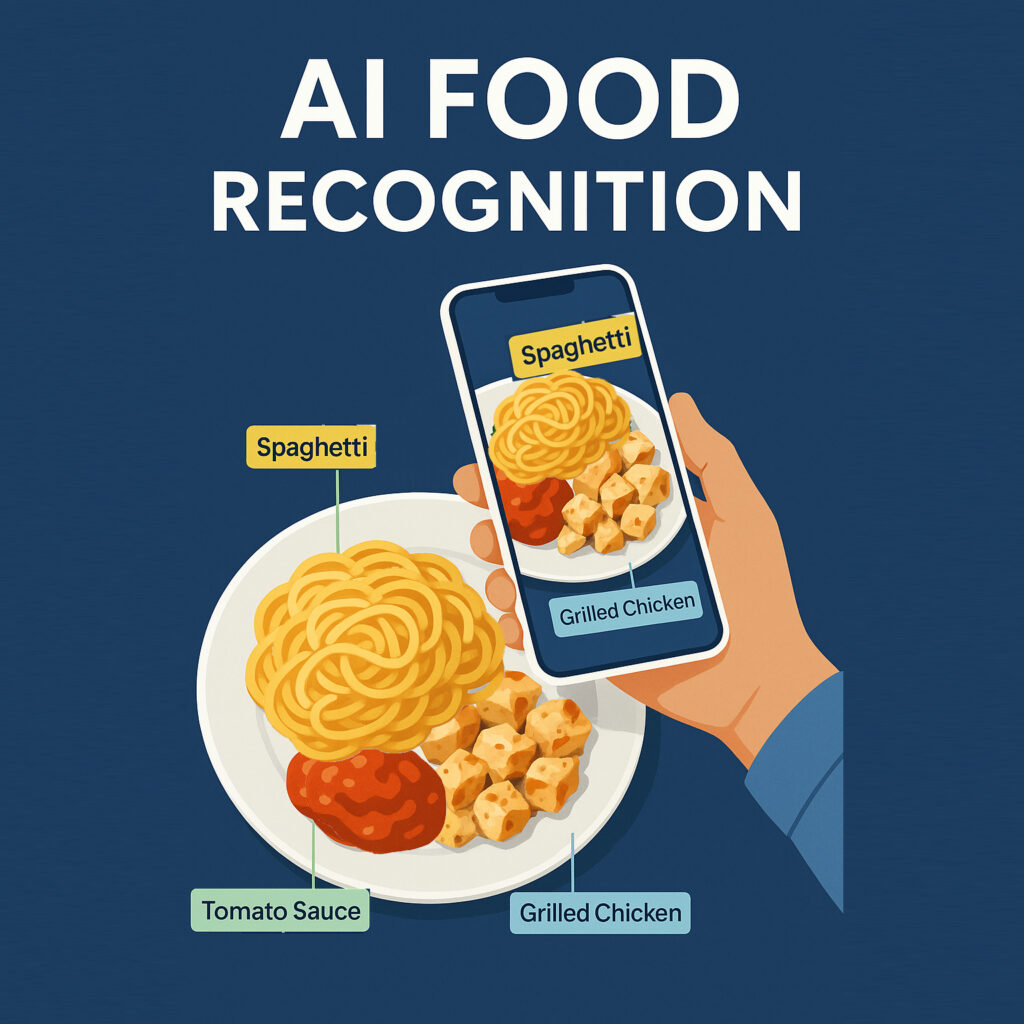
Analysing a meal involves several separate tasks. The system must first detect the food, identify the dish or its components, estimate their amounts, and associate them with an appropriate recipe and food-composition source.
An error at any stage affects the final result. A salad may be recognised correctly but still have its energy underestimated if the dressing is omitted. Two soups that look almost identical may contain very different quantities of oil, cheese or cream. In stews and mixed dishes, a large share of the nutritional information is not visible on the surface.
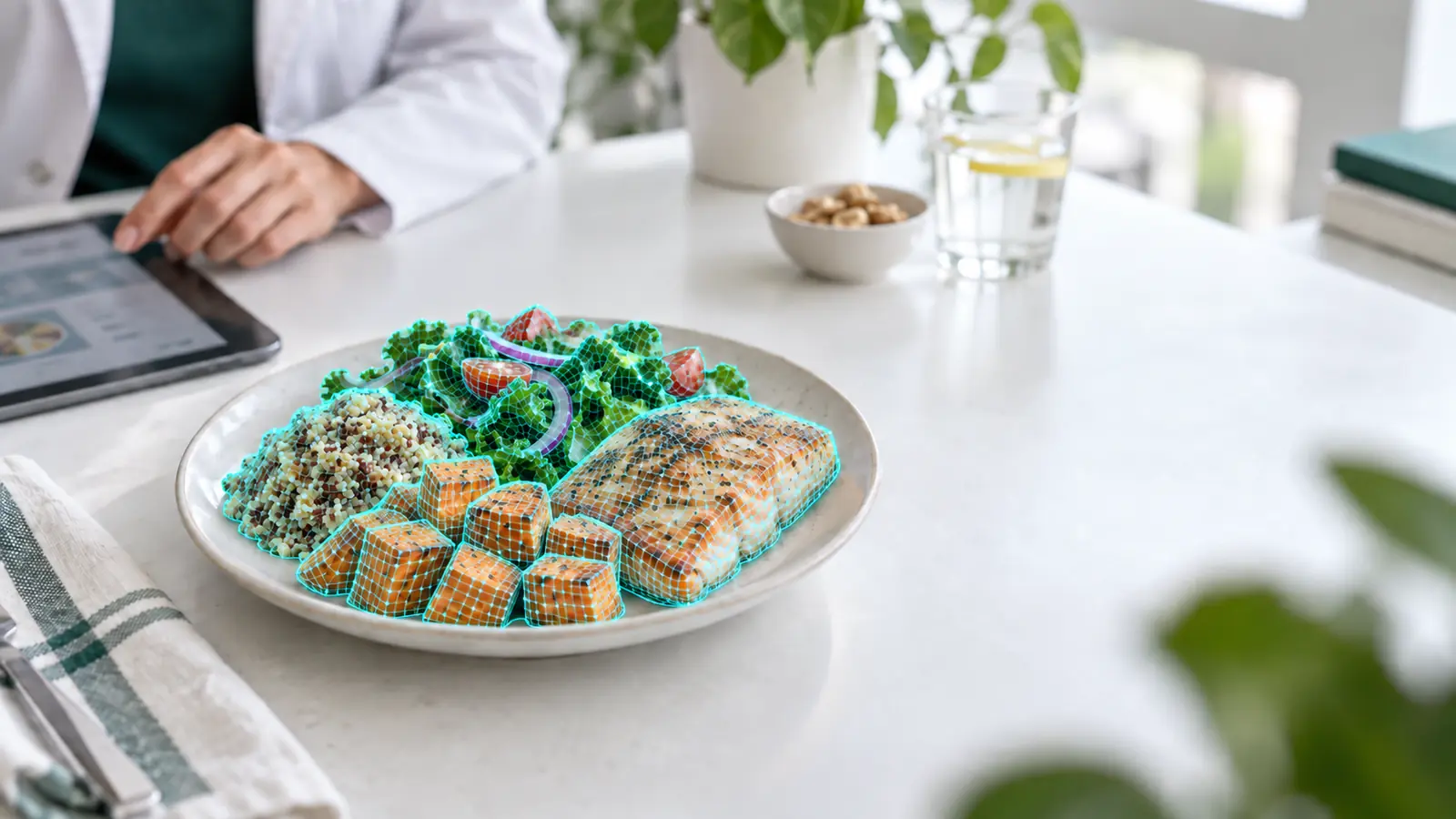
Quantity estimation introduces another source of uncertainty. Camera angle, distance, plate shape and overlapping ingredients all affect the conversion from an image to grams. This is why LogMeal treats food recognition and food quantity estimation as related but distinct technical problems.
Context matters too. An application receiving unrestricted photographs from thousands of users starts with less information than a system operating in a hospital where the daily menu, recipes and planned serving sizes are already known.
How Food AI Engine handles meals recorded through an integration
When a company integrates Food AI Engine into a nutrition, health or wellbeing product, the system analyses the image and returns structured information about the foods and dishes detected. Food AI Engine is available through Analyse, Monitor, Recommend and Custom plans, so businesses can match the available capabilities to their product. Recommend includes food quantity estimation based on volumetric analysis of the visible food, while Custom supports requirements that need a tailored configuration.
LogMeal provides a standardised proposal for the ingredients and quantities associated with the recognised dish. Nutritional values are then calculated using professional food-composition databases used by dietitians and nutrition specialists, including EuroFIR, USDA, NEVO, BEDCA and CESNID.
This proposal is not presented as an immutable account of the actual recipe. The user can add or remove ingredients and adjust their quantities. If a soup contained more oil, a coffee included sugar or the serving was smaller than estimated, that information can be reflected in the record.
The combination matters. AI reduces the work required to document a meal, while editing captures information that the camera cannot see. The process supports a purpose similar to a 24-hour dietary recall, but records the meal at the time of consumption and retains the photograph as a reference.
LogMeal evaluated this approach against 24-hour dietary recall within the VALIDITHI project, developed with EIT Health, Nestlé, University Medical Center Groningen and the Computer Vision Center. The results and study context are described in this article on LogMeal food recognition and 24-hour dietary recall.
What changes when the system knows the menu and recipe
LogMeal Food Recognition Kiosk operates in a different setting. In hospitals, care homes, elite sports centres, employee canteens and self-service restaurants, the system can work with the dishes available at each location and meal service. When recipes and reference serving sizes have been configured by the organisation, the analysis starts from the ingredients and nutritional values defined for the food that is actually being served.
That context reduces uncertainty. The algorithm does not have to choose from every possible meal or reconstruct the entire recipe from appearance alone. It can compare the tray with a defined set of dishes for that service.
For intake monitoring, an image of the tray before the meal records what was served. A second image after the meal makes it possible to estimate what remains. Comparing the two supports the calculation of actual intake and food waste without asking the patient or diner to remember and report the amount consumed.
The result still depends on accurate menus, recipes and serving data, and on the prepared dish matching the information supplied by the organisation. Context reduces uncertainty; it does not justify a promise of perfect measurement.
What should a business check before integrating this technology?
A general accuracy percentage is of limited value unless it explains what was measured. Correctly naming a dish is different from accurately estimating its weight, calories, protein, fat and carbohydrate.
Before selecting a food recognition API or nutritional monitoring system, a business should ask which meals were used for evaluation, how the images were captured and whether the technology can use its own menus and recipes. It should also establish whether results can be edited, how invisible ingredients are handled and whether the system has been tested in conditions comparable to the intended deployment.
For a B2B or B2B2C integration, the organisation is not simply adding a computer-vision model. It is introducing a new data source into a product, operational process or professional decision. Capture methods, contextual information, traceability and validation are all part of the system.
The NUTRITION 2026 findings reinforce a principle LogMeal already applies in product design: making dietary recording easier should not mean ignoring missing information. Photography reduces friction. Portion estimation, nutritional composition, context and review make the resulting record more useful.
If your company is developing a nutrition, digital health or wellbeing product, explore Food AI Engine and its 30-day trial. For inpatient care, care homes or collective foodservice, learn about LogMeal for Hospitals or request a tailored demonstration.
Source: American Society for Nutrition, “Photo-based calorie-tracking apps may underestimate energy in meals,” findings presented at NUTRITION 2026.
Frequently asked questions
Can AI calculate calories from a food photo?
AI can estimate calories by recognising foods, estimating their portions and matching them with recipes and food-composition data. A photo may not reveal hidden ingredients or the exact preparation method, so the result should be treated as an estimate and supported by context or user validation when accuracy matters.
Why can photo-based calorie estimates be too low?
Common causes include underestimated serving sizes and ingredients that are difficult or impossible to see, such as cooking oil, sugar, dressings and sauces. An incorrect recipe match can also affect energy and macronutrient calculations.
How does LogMeal improve a photo-based nutritional estimate?
Depending on the product and setting, LogMeal combines food recognition, volumetric quantity estimation, standardised ingredient proposals, professional food-composition databases, editable results and contextual information such as menus and recipes.
Does LogMeal Kiosk measure what was actually eaten?
In intake-monitoring workflows, LogMeal Kiosk can compare tray images captured before and after the meal. Combined with configured menus, recipes and reference serving sizes, this supports estimates of the amount served, consumed and wasted.